





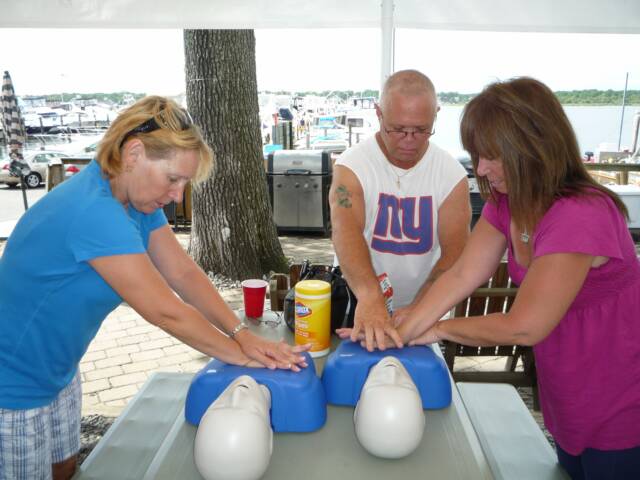
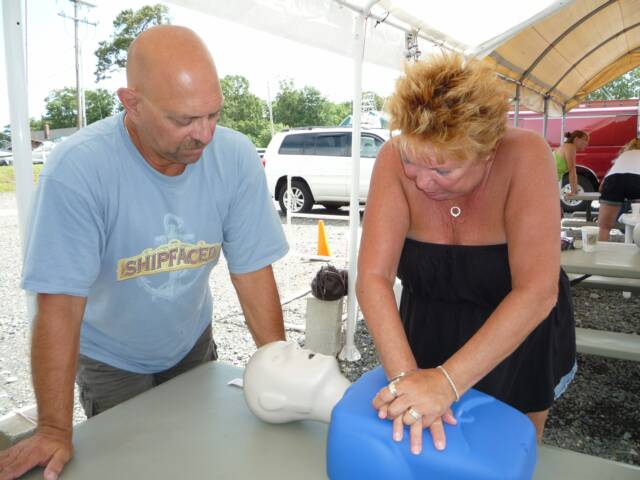
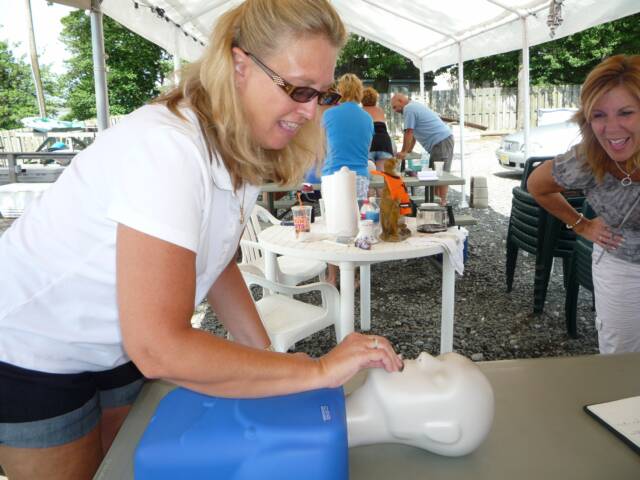
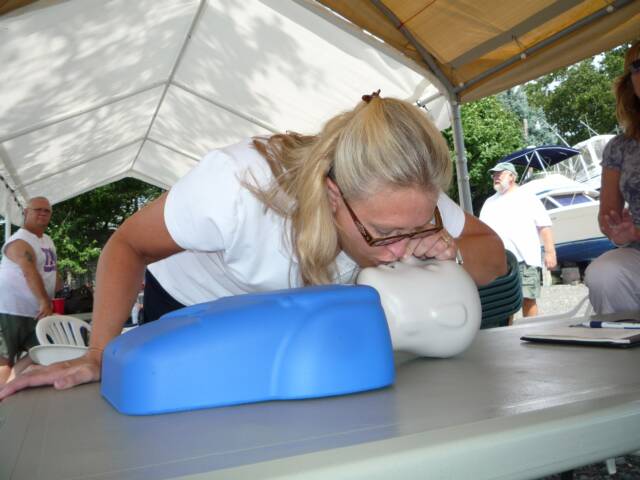
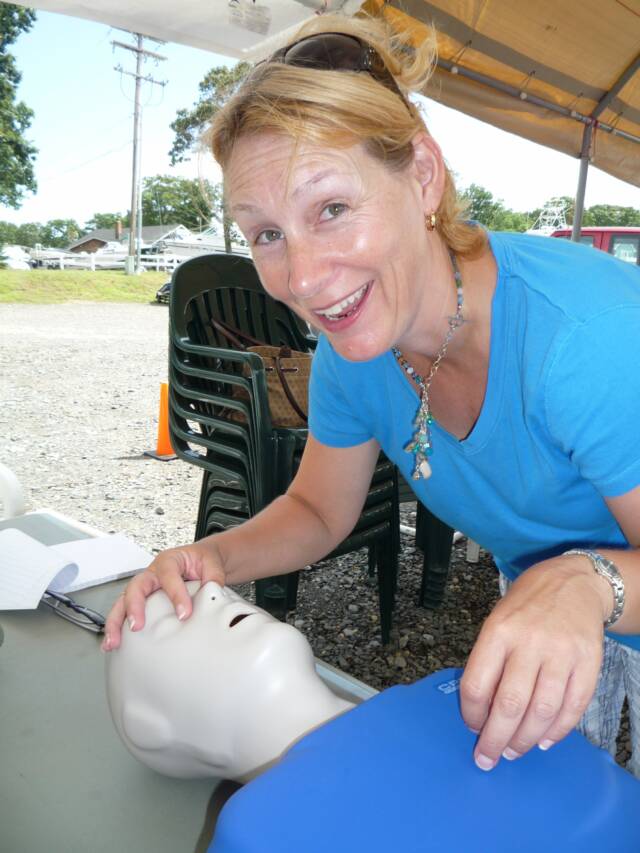
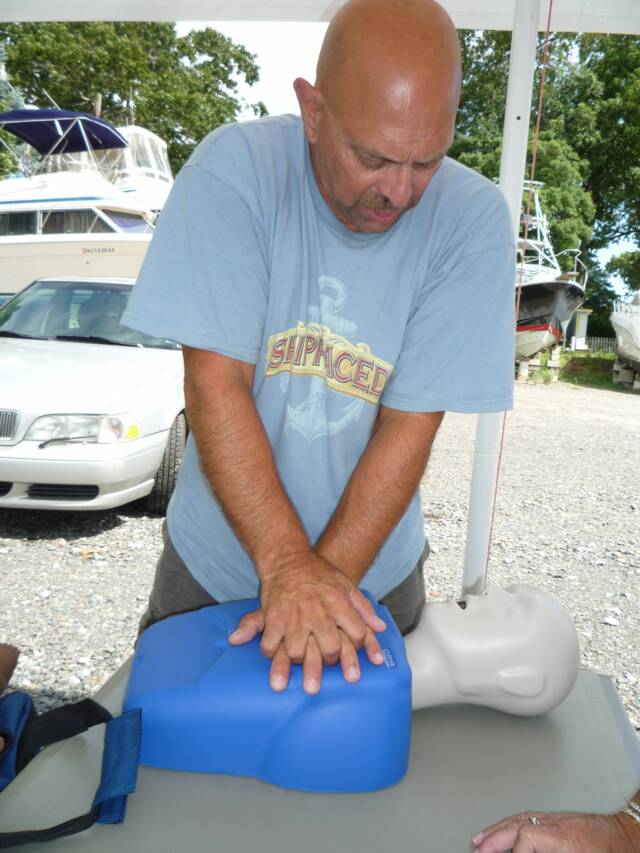
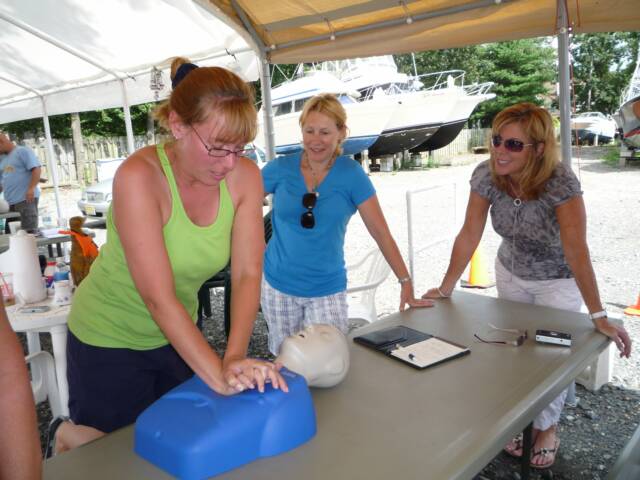
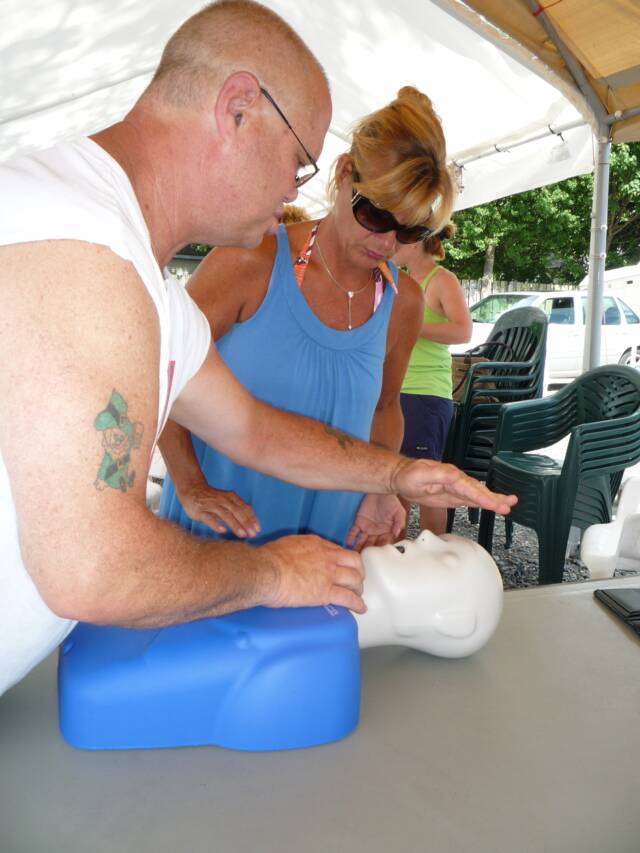
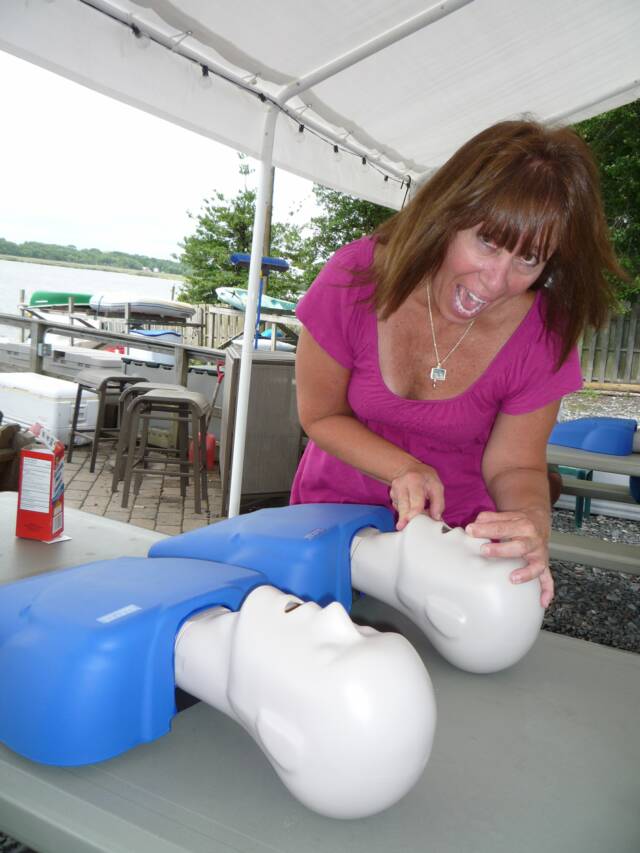



 Shaking and Shouting to person to obtain a responseIf non-responsive tilt person’s head back to look and listen for signs of breathing by placing your ear to person’s mouth and looking for rise and fall of chestCheck for a pulse on the side of the neck closest to the windpipeTilt person’s head backPinch their nose and give two normal breaths into their mouthNext, check for pulse on side of neckIf necessary, begin CPR:Locate area on body to perform compressions: use fingers to locate the area near end of the breastbone where ribs come together. Place two fingers at end of breastbone, then, move the heel of your hand just above your two fingers (should be near the area of chest between the nipples)Use both hands to give compressions. Place one hand on top of the other and intertwine fingers and lock elbows. The compressions should be given via palm/heel of hands (not via your fingers).Ratio of compressions to breaths is: 30 compressions then 2 breaths. Ensure person’s head is tilted and nose is pinched when giving the 2 breaths. Perform CPR cycle (30 compressions to 2 breaths) for a series of 4 timesCheck for infant’s consciousness by tickling bottom of their feetCheck for infant’s pulse on the inside of the arm between shoulder and elbowCompressions are performed with 2 fingersCompression cycle is 5 compressions to 1 breath. Repeat for 10 cyclesLocation for compressions is within the nipple line/center of chestWhen breathing into an infant’s mouth place your mouth over the infant’s nose and mouthIt is best to perform CPR on a hard surfaceAlways start and end with 2 breathsThe chest compressions should generally be 1 second in duration